
PURE CINNAMON
Sri Lanka is a well-recognized place for spices. The spice industry has a long history in Sri Lanka. Among all those spices Sri Lanka is one of the most valuable and important spices produced in Sri Lanka. A significant amount of the national income is gained through the export of cinnamon.
There are many uses for cinnamon. Utilization to flavor a wide range of meals, including desserts, curries, and drinks. It is also often used in baked products. The bark pieces are used to make essential oil, which is then used in cuisine, liqueur, fragrance, and pharmaceuticals are some of the use of the cinnamon tree. Due to the importance of cinnamon, it has also gained a significant amount of market share internationally. Considering the medical and natural value of cinnamon it has become very expensive when compared to all other spices found in Sri Lanka. However, anyone who wishes to visit Sri Lanka has the greatest opportunity to purchase Ceylon cinnamon.
Sri Lanka is the world’s largest producer and exporter of pure cinnamon to the world and pure Ceylon Cinnamon Suppliers from Sri Lanka claim 90% of global market share.



Ceylon Cinnamon is categorised into four major grades – Alba, Continental, Mexican and Hamburg based on the diameter of the quill, where the most expensive (Alba) has a 6 mm diameter quill. Furthermore, value-added Cinnamon products such as oil, powder and tablets are also produced and exported to a large number of countries.
Cinnamon was a precious spice in the west during 14th -15th centuries and its’ primary use was to preserve meat and to retard the growth of bacteria. The quest for cinnamon was a major factor which led to exploration of the world in 15th century. By that time the real cinnamon was produced in only one place, namely in Ceylon or Sri Lanka. Anyone who had the control of the supply flow would have made profits immensely. Portuguese traders made their way to Ceylon in the 15th century, enslaved the natives and had the control of the trade from Arabs. Soon the Dutch displaced the Portuguese and gained the control of the cinnamon monopoly. It was the Dutch who took a massive effort to boost the production by domestication of crop and expanding extent in the areas they had the control. Because of that effort cinnamon cultivations were moved to Western and Southern coastal belts of the island.
Cinnamon is the most important and valuable spice produced in Sri Lanka. Before the advent of modern food preservation technology Europeans used Cinnamon with Pepper to preserve meat products. Cinnamon is used in bakery products, Asian foods and flavoured tea for its distinctive aroma & flavour. With growing concern on health hazards associated with synthetic flavouring agents used in the food industry, there is an increasing preference for natural flavours worldwide.
The Ceylon Cinnamon belongs to the family Lauraceae and it contains about 250 species and subspecies. ‘Ceylon Cinnamon’ (Cinnamomum Zeylanicum Blume) and Cassia are the more important ones that are traded in the international market. Cassia originated from different sources such as China, Vietnam region, Java region, Indonesia and India. ‘Ceylon Cinnamon’ referred to as “sweet cinnamon” and “true cinnamon” is considered superior to the variety known as Cassia.


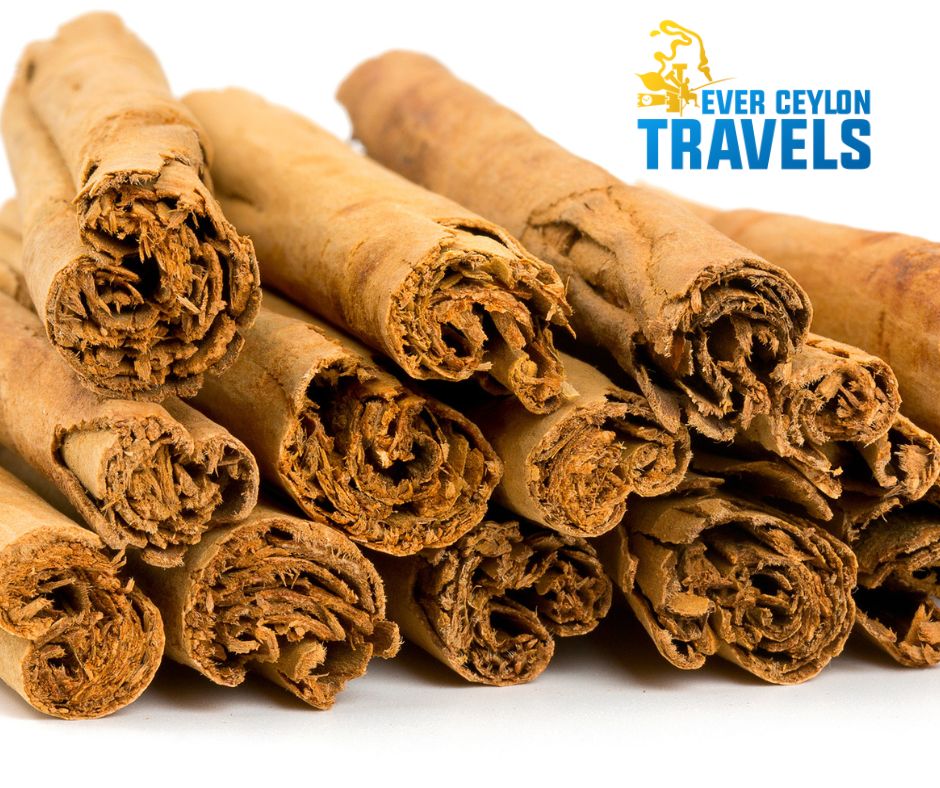


Varieties
There are eight cinnamon species in Sri Lanka. Among them only Cinnamomum zeylanicum Blumeis grown commercially. In tradition, there were several types of cinnamon categorized based on taste of the bark. “Pani-Miris Kurundu” was the best with sweet-pungent taste and “Miris Kurundu”, “Sevel Kurundu” and “Thiththa Kurundu” are the others. Currently ten cinnamon accessions have been identified based on yield and quality performances and best two lines, named as “Sri Vijaya” and “Sri Gamunu”, were released. Other selections are under evaluation in different agro climatic zones.
Soils and Climatic needs
Soils
Cinnamon can be grown in various types of soils varying from silver sands in Negambo to loamy and lateritic gravelly soils in Southern costal belt and interior. The bark quality is influenced by soil and climatic factors and the best quality cinnamon is produced in white sandy soil in Negombo area. However, the most expensive grade of cinnamon called “Alba” is mainly produced by very skillful peelers and they are the lowest diameter quills (6 mm) only fill with one or two inner fillings with super quality. Cinnamon needs a deep soil but cinnamon roots can penetrate even through the cracks of the parent material to deeper layers.
Climate
Cinnamon is commercially grown in coastal belts in Sri Lanka and spread to interior part of the country where elevation is increased up to about 250 above MSL. Naturally cinnamon has been found in central hilly area of Sri Lanka the elevation increased up to about 500m amsl. Until to date it can be found in Sinharaja and Knuckles forest reserve. Wet zone is ideal for the successful growth of cinnamon but it can be grown commercially in Intermediate zones of mid and low country, where annual rainfall is more than 1750mm. However it is not suitable for areas with prolong dry periods.
Medicinal and Chemical Properties
Euginol is the main chemical ingredient in cinnamon leaf oil and Cinnamaldihide is present in cinnamon bark oil. However there are hundreds of minor chemical ingredients which give characteristic flavor and aroma in true cinnamon.
Cinnamon has been used for medicinal purposes and has been known as a healing herb since it is mentioned in Chinese botanical books that date back to 2700 B.C. In ancient Rome It had been used medicinally for cold and flu as well as for the problems of the digestive system. Recently, it has been studied for its ability to boost brain power, reduce blood clotting and its healing effects on the heart and colon. Recent studies have proved its ability to control type 2 diabetics by reducing blood sugar level and to reduce blood cholesterol level. In traditional society’s cinnamon is said to have used to relieve digestive upset, congestion, menstrual problems, stiff joints and muscles. It has said to been used as an anti-inflammatory agent and as a pain reliever to arthritis patients. Some studies had shown that cinnamon help to cure urine tract infections and to fight tooth decay and gum disease.
