+1(626) 400-7989

GEM ISLAND

Sri Lanka has a very valuable and interesting history of gem mining. Historically, Sri Lanka has been referred to as Ratna-Dweepa, because of its gems and this island is a “Gem Island.” This statement reflects the abundance of its natural resources. However, the precious gems in Sri Lanka has a very large demand all around the world. The world’s largest gem abundance is found in Sri Lanka, which is also a major source of more than 75 different kinds of precious as well as semi-precious gems. Ruby, Sapphire, Spinel, Aquamarine, moonstone, and Alexandrite Rose quartz are some of the most famous gemstones available in Sri Lanka.

All these Gems are mainly mined in Rathnapura. There are both cut and polished as well as new gens which is not yet polished over there. The gem factories in Sri Lanka play a vital role in cutting, polishing, and shaping gems according to a very beautiful manner. Accordingly, these gems have become an important natural resource of the jewelry industry.

GEMSTONES FROM CEYLON

Considered to be the most valuable gemstone variety in the Corundum mineral species, the distinct red in Ruby is caused by the presence of chromium. The colour spectrum of Rubies found across the world varies from orange-red to purplish red. Colour is the most significant factor affecting a ruby’s value: Fine gems are a pure, vibrant red to slightly purplish red.

Most Sri Lankan Ruby varieties are of a pinkish red and display a tint of purple, caused by the presence of iron in addition to chromium oxide, which is unique to its Sri Lankan origin. Ruby deposits in Sri Lanka are not distinctively localized and are found in the same mine with other gemstones of the Corundum family while the stones of better quality have been often found within the Embilipitiya – Udawalawe area.

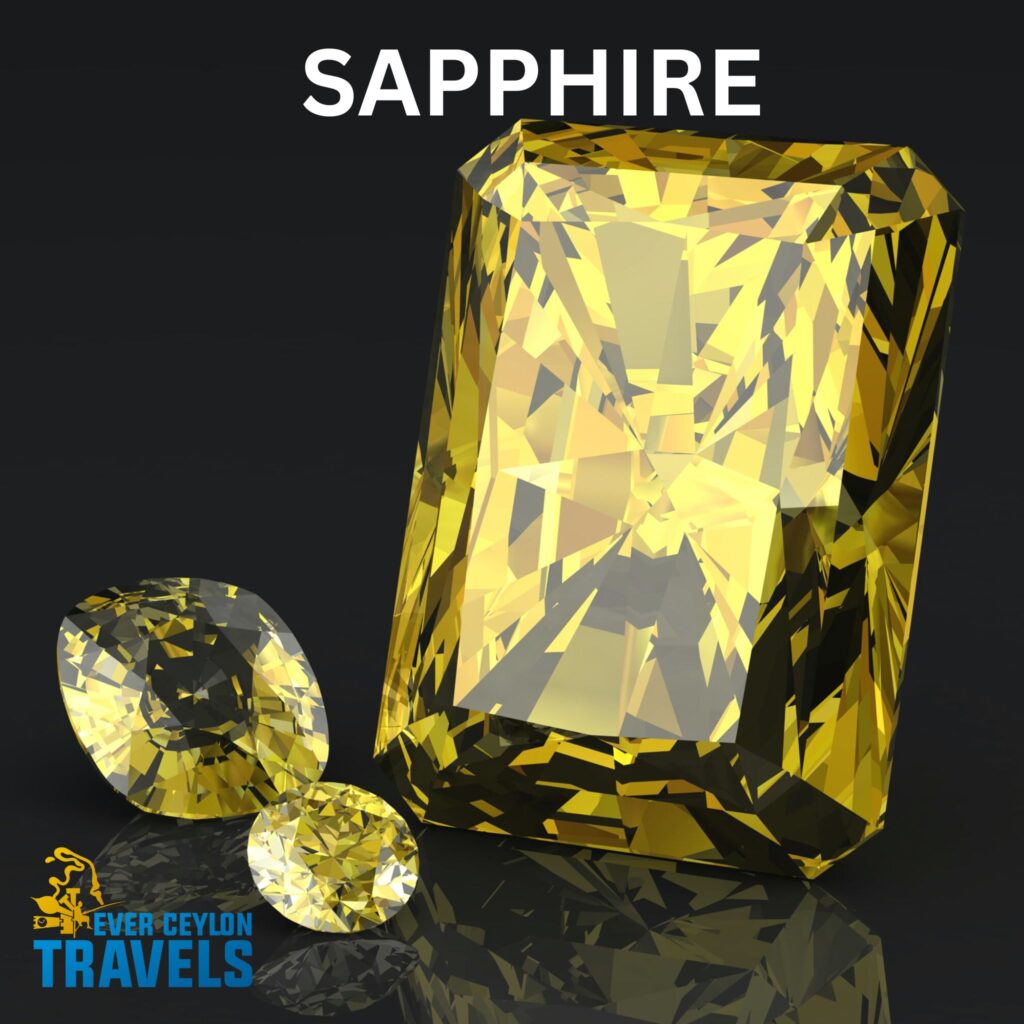
Although blue is the colour most widely identified with sapphires, the colour of sapphire can range from blue to violet, green, yellow, orange, pink, purple, and intermediate hues known as fancy sapphires. Sri Lanka is the top source of finest Ceylon Sapphires to the global market and exports Ceylon Blue Sapphire, Padparadscha, star sapphires, and range of fancy sapphires to the global gem markets.

In addition to their ornamental purposes, sapphires are also used in purely functional applications, such as infrared optical components, high-durability windows, wristwatch crystals and movement bearings, and very thin electronic wafers, which are used as the insulating substrates of special-purpose solid-state electronics such as integrated circuits and GaN-based blue LED.

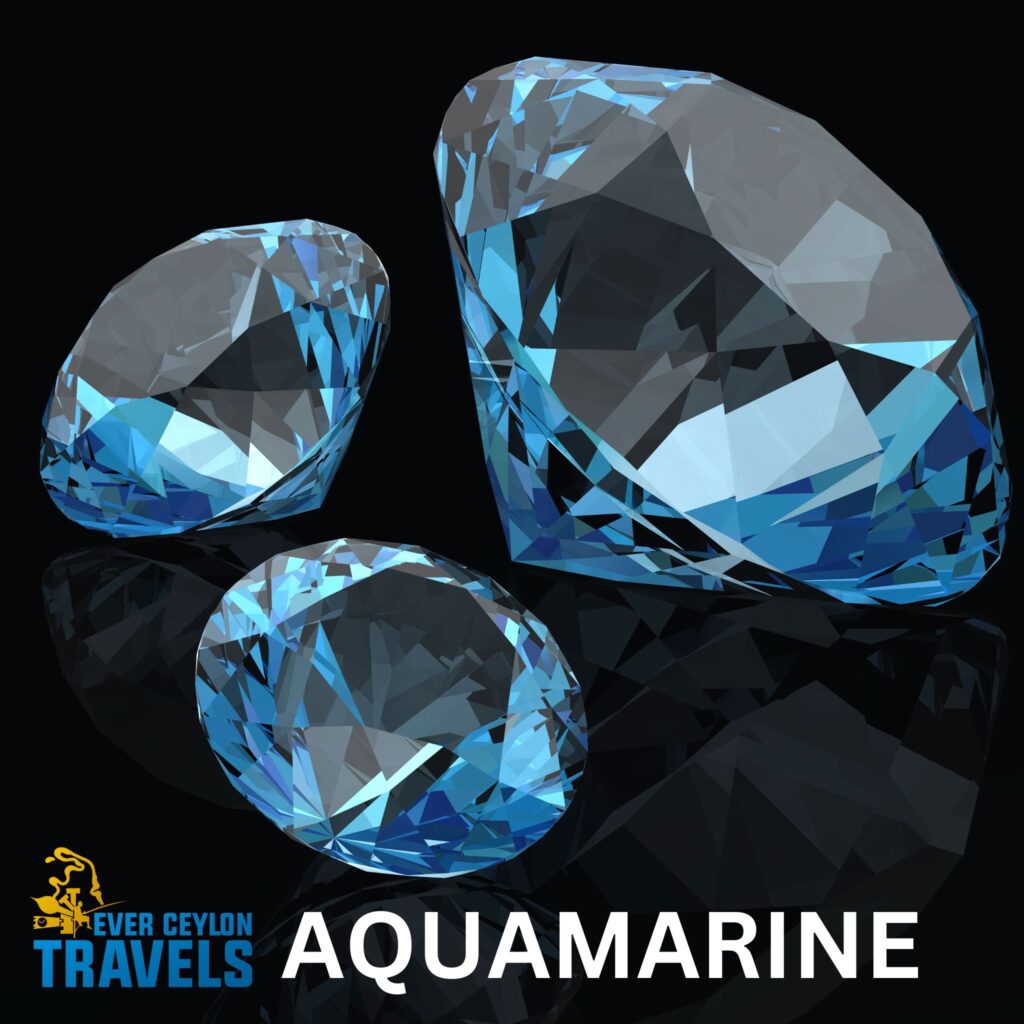
Found in green-blue to blue colour variations, aquamarine crystals get the blue tone due to the presence of iron within the crystal. They are comparatively large and well-formed and the depth of sea blue colour is most intense in large specimens while the colour in smaller stones is comparatively lighter. Unlike other coloured gemstones, aquamarine’s value comes primarily from its tone rather than the hue and saturation and stones with darker tone are highly-priced and sought after.

Often found completely flawless, aquamarine has been found in Rathnapura, Rakwana, Morawaka, Hatton, Nawalapitiya, Galle, Matara, Tissamaharama and Lunugamwehera in Sri Lanka.

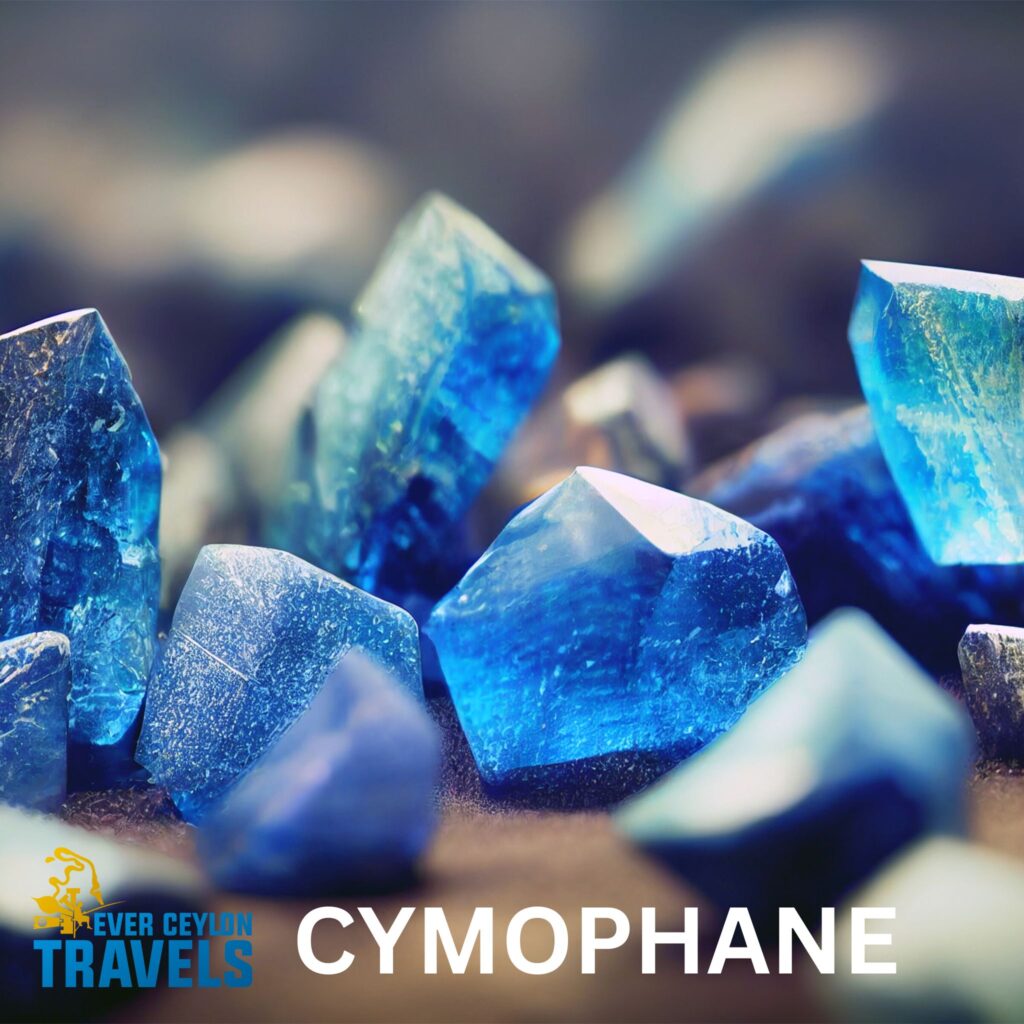
A variety of chrysoberyls displaying chatoyancy caused by the light reflecting from inclusions of tiny parallel needles or hollow tubes, cymophane are commonly known as cat’s eye.

Chrysoberyl occurs in varying degrees of transparency ranging from transparent and clear to cloudy translucent and opaque. Widely distributed within the main gem producing regions of this country and mostly localized around Rakwana, Bulutota, Deniyaya, Morawaka, Elahera, Avissawella, Pelawatte, Horana, Matugama, Panadura, Rathnapura, Aluthgama, Ambalantota, Agalawaththa, Bulathsinghala, Kalapugama and Mestiya, the colour of Cymophane or Cat’s Eye differ from semi-transparent golden-yellow to slightly greenish-yellow or brownish-yellow colour.

Fondly known as an ‘Emerald by Day and a Ruby by Night’, Alexandrite is a type of Chrysoberyl that is rare yet abundantly found in Sri Lanka. Their ability to shift colours from red to green when viewed under different light sources makes Alexandrite a highly sought after gemstone in the global market. A strongly pleochroic gem, which displays different colours when viewed from different directions, the three pleochroic colours of Alexandrite are green, orange, and purple-red.

However, the gem’s colour change doesn’t arise from the gem’s pleochroism, but from the mineral’s unusual light-absorbing properties. Although most Alexandrites found in Sri Lanka can be faceted, there is an occasional occurrence of colour changing alexandrite cat’s eye.

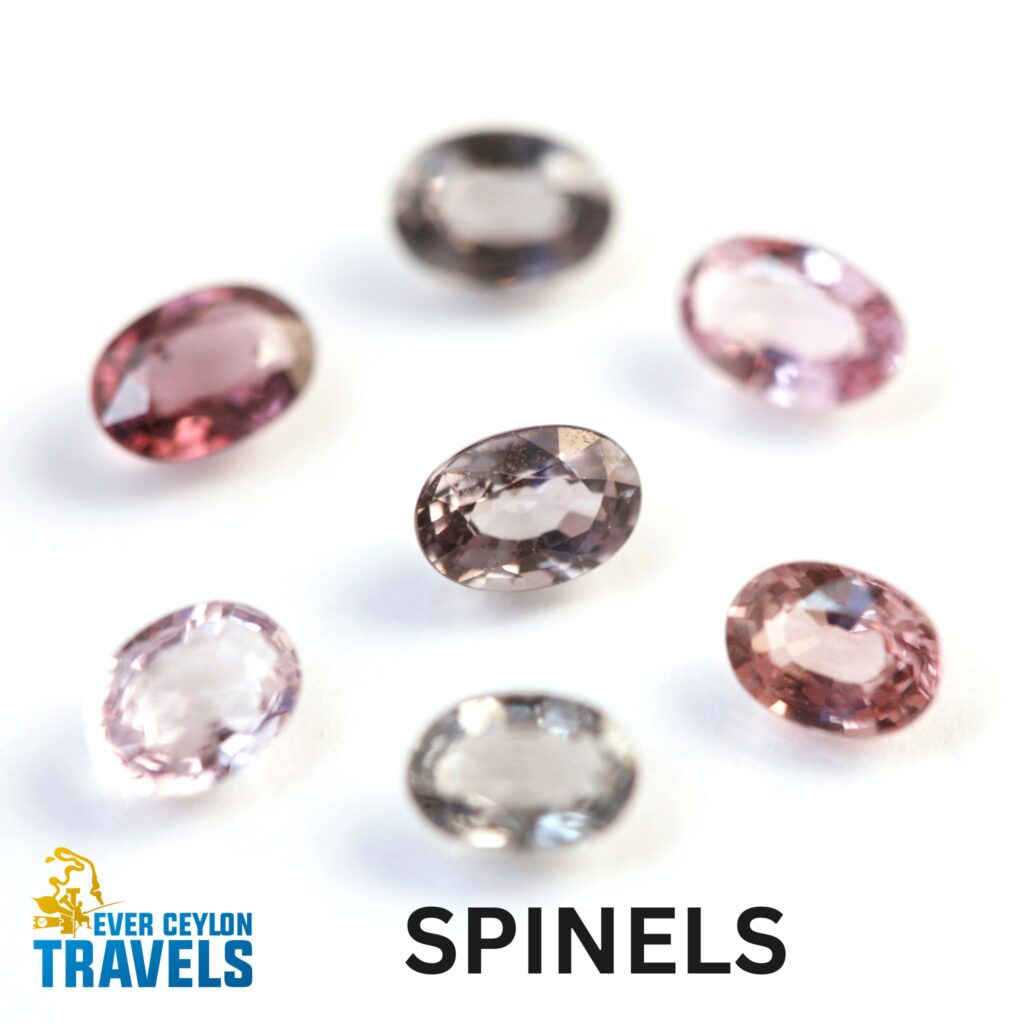
Abundant, attractive, affordable and colourful spinels are available in red, pink and blue colour and can occasionally exhibit asterism and chatoyancy. Spinel is a gemstone found in great abundance in Sri Lanka and until the rise of modern gemology in the 19th and 20th Century spinels were often mistakenly identified as Corundums, as they were mostly found in the same mine. Subsequent research into the mineral composition of these two gem families led to their separation and many gem enthusiasts finding that their beloved rubies and sapphires are in fact spinels.

A popular substitute for diamond around the world, Zircon is colourless in its chemically purest form. Mostly found in Matara Sri Lanka, colourless zircons are also known as Matara Zircon or Matara Diamonds. Colourless zircon found in Sri Lanka is celebrated for its brilliance and flashes of multicoloured light, called fire. Meanwhile, zircon is also typically found in an array of colours from brown, red, blue, purple, and rarely green. Often confused by cubic zirconia, Zircon has high brilliance and dispersion.

A purple variety of the mineral quartz, the finest amethyst colour is strong reddish-purple to purple with no visible colour zoning. Coloured by Iron, the shades of Amethyst occur in transparent pastel roses to deep purples. Like many other gemstones, the quality of Amethyst varies according to its source. The best varieties of amethyst can be found in Siberia, Sri Lanka, Brazil and the far East.

EVER CEYLON TRAVELS

Login